❦ Autumn notes
Garden Tomato Trellis: What to Look For Before You Buy
What to look for in a garden tomato trellis, from cages and stakes to clips, with a planting-day checklist and official extension advice on supporting fruit.
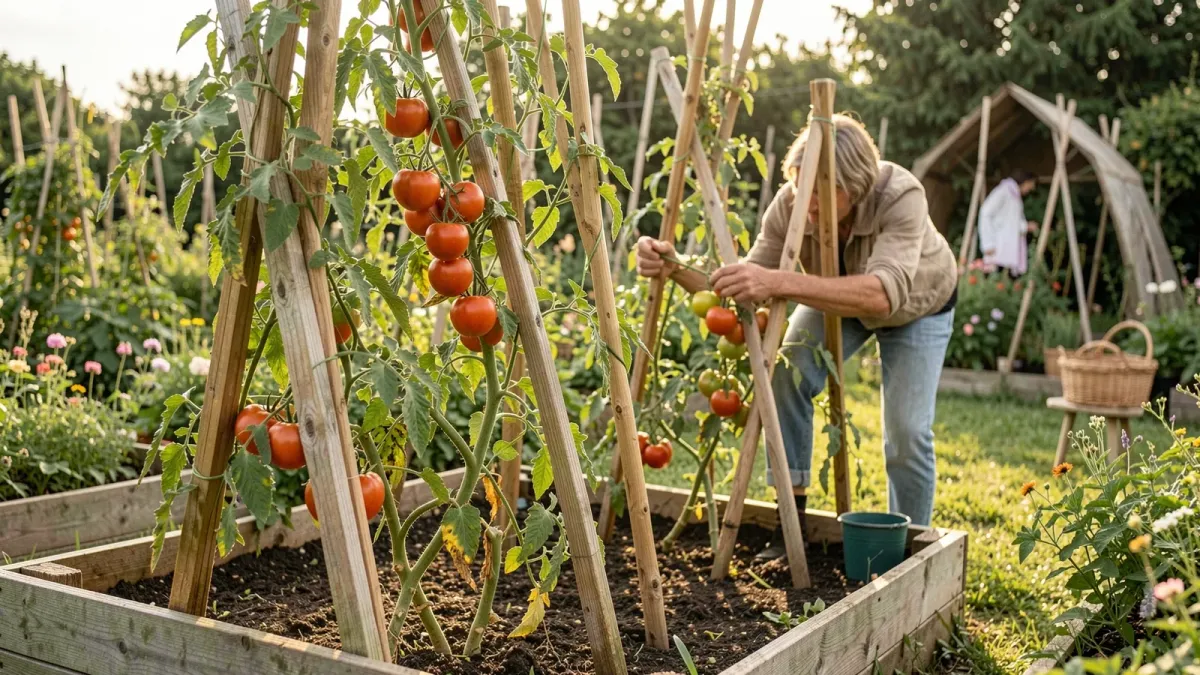
A tomato trellis has to be in the ground before the plant is heavy
A garden tomato trellis is not a decoration you add when the plant starts to lean. By then the roots are in the way, the stems are already sideways, and you will do both a favor if you had chosen the support on planting day. We have tied a hopeful cage around a plant that was already falling over. It worked, in a fashion, and it also snapped a branch we liked. The next year the cages and stakes went in first, and the plants were less of a weekly rescue.
This is a what-to-look-for guide, not a pruning doctrine, and not a test of branded cages. Determinate and indeterminate tomatoes do not want the same height or the same stoutness. A "tomato cage" in a shop may be sized for a tidy determinate plant and then asked, unfairly, to hold a tall indeterminate one in a windy backyard.
University extension services have long recommended supporting tomatoes to keep fruit off wet soil and to make picking and disease-watching easier. See current vegetable guidance from a land-grant service such as Penn State Extension, and match it to your region. In Britain, the RHS tomato pages are a sensible official check. This article will not invent a staking recipe that pretends to fit every cultivar.
Choose the support by the kind of tomato, then by the wind
| Support | Tends to suit | What to look for | Where it disappoints |
|---|---|---|---|
| Short cage | Many determinate, bush-type plants | Rings stout enough not to close, and legs long enough to go deep | Using a flimsy cone under a tall indeterminate plant |
| Tall cage or cylinder | Taller plants if the cage is actually tall and stiff | A diameter you can reach into, and a way to stake the cage itself in wind | A tall, thin cage that becomes a sail and then a lean |
| Stake and ties | Gardeners who will tie regularly | A stake taller than you think, driven before the plant is large | A short bamboo cane asked to do a two-meter job |
| String or line from a sturdy frame | Rows in a greenhouse or a well-built outdoor frame | A frame that is anchored, and a line that will not cut the stem | Hanging a heavy plant from a gutter or a weak hook |
| Trellis panel | Several plants in a line, if you will prune or weave them as you intend | Posts in the ground, not only a mesh leaning on the stems | A decorative panel with no independent posts |
| Clips or ties | Any of the above | Soft, adjustable ties or clips that do not bite as stems thicken | Thin wire, or a forgotten tie that girdles the stem |
Garden tomato trellis clips can be handy if they are large enough and you check them. They are not a substitute for a structure that stands on its own.
A buyer's checklist for a garden tomato trellis
- You know whether your plants are determinate or indeterminate, or you have looked at the tag
- The support is tall enough for that habit, with a little extra
- Legs or posts can go deep enough to stand in a summer wind
- You can reach fruit without dismantling the structure
- Ties or clips are soft, and you are willing to check them
- The support will be installed at planting, or immediately after
- You have one support per plant, or a frame built for the actual number of plants, not a communal lean
- The material will still be usable after a season of water and sun, or you accept a one-season tool
- There is an aisle for picking and for looking at the lower leaves
If you are growing in large pots, the same rules apply, with an extra one: the pot must be heavy enough, or the support must be guyed, so a tall plant does not tip the whole container.
How we tie, water, and keep looking
We drive the stake or set the cage at planting, we settle the plant, and we add the first loose tie when there is something to tie. We water the soil, not the daily performance of the leaves, and we look at the lower part of the plant often, because that is where problems hide once the trellis is full.
We do not claim a particular pruning style as a rule. If you remove leaves or side shoots, do it because a method you trust in your climate says so, not because a photograph of a single stem looked tidy. A trellis will show the plant clearly, which is a gift, and it will also show a mistake clearly. That is useful.
If a cage fails in July, add a stake beside it rather than hauling the whole plant upright in one heroic pull. Work in small lifts, and accept a slightly crooked plant over a broken one.
Buying for more than one plant, without a tangle
If you are putting in four or six tomatoes, buy the supports as a set and set them in a line with an aisle you can still use in August. A mixture of short shop cages and one tall homemade frame in the same row is how plants fall toward the strongest neighbor. Keep the spacing honest; a trellis does not make a crowded row into a wide one.
Share the shopping list with anyone else who waters the garden. A support system only works if the next person will also tie a loose stem instead of hoping the cage will "find" it. A short note on a shed door, or a handful of spare ties in a known tin, is part of the equipment.
Questions about choosing a garden tomato trellis
Do I need a trellis if I buy a "bush" or determinate tomato?
Many determinate plants still benefit from a short, stout cage or a stake so fruit stays off the soil. They may not need a tall panel. Read the tag and look at a current extension page for your type of plant.
Are tomato cages from the shop strong enough?
Some are, for smaller plants. Many are not, for tall indeterminate tomatoes in wind. If you can flex the cage in the shop with one hand and feel sorry for it, believe that feeling, or plan to stake the cage itself.
When should I put the trellis in?
At planting, or immediately after, before the roots fill the hole you would have used for a post. Adding a support later is possible, and it is also how stems get broken.
Do garden tomato trellis clips replace ties and a real structure?
No. Clips can speed tying to a stake or a line. They cannot hold a plant in the air if the stake is short or the frame is weak. Check that they are not tight as the stem thickens.