❦ Autumn notes
Garden Cucumber Trellis: What to Look For Before You Buy
What to look for in a garden cucumber trellis: height, strength, spacing, and style, with a practical buyer checklist and university extension advice.
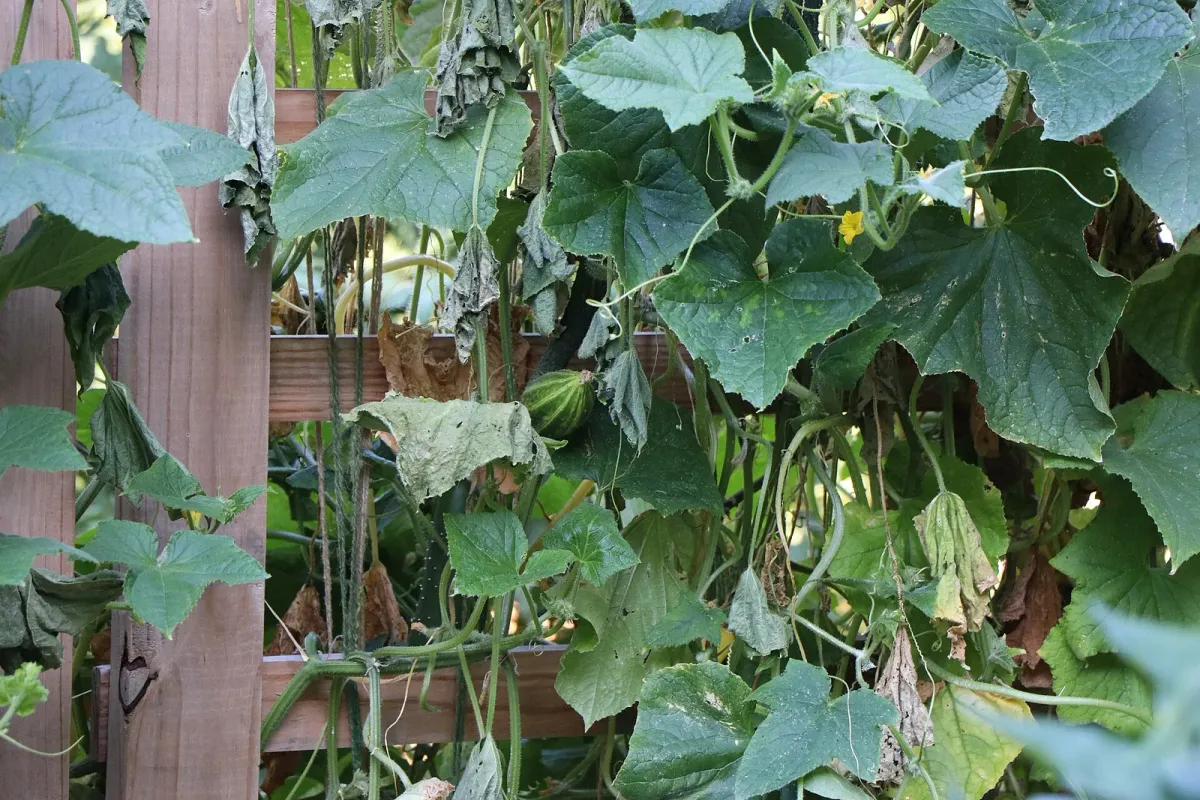
Why a cucumber trellis is worth the fuss
Cucumber vines will run if you let them. On the ground they take a wide row, the fruit sits in the soil, and the leaves stay damp after rain. A garden cucumber trellis lifts the same plants into a narrower footprint, keeps fruit cleaner, and makes harvest a matter of looking at eye level instead of hunting under a mat of leaves.
That is the practical case, and it matches what extension services tell home gardeners. Clemson University’s Home & Garden Information Center notes that training cucumbers on a trellis or fence frees space, keeps fruit clean, reduces disease pressure, and makes picking easier. Their fact sheet describes a workable trellis about 6 feet high, with a tight top wire, a bottom wire, and twine running between the two at each plant, and with posts no more than 15 feet apart. You can read the details in Clemson’s cucumber fact sheet (HGIC 1309).
A store-bought trellis is only a good buy if it can stand in wind and a wet vine’s weight, sit at a useful height, and leave you a path to pick. A decorative panel that flexes when you lean on it will not.
Match the trellis to the plant, not the catalog photo
Cucumbers are not all the same vine. Slicing and pickling types that run will need a tall, continuous support. Bush varieties exist for tight spaces and may not need a full trellis at all. If the seed packet says “bush,” a low cage or a short fence may be enough. If it says “vining,” plan for height.
Clemson’s spacing notes are a useful buying cue. For trellised cucumbers, they recommend planting four to five seeds per foot in rows 3 feet apart, then thinning to 9 to 12 inches once the plants are 4 to 5 inches high. For plants left on the ground, the rows jump to 5 feet apart. If your bed is only 3 feet wide, a floor-sprawl plan will crowd itself.
Height is the measurement people under-buy. A 3-foot ornamental trellis looks tidy in April and is too short in July, when a vigorous vine is looking for another foot. A support in the 6-foot neighborhood, well anchored, is closer to what a running cucumber wants. If you garden in a strong wind, height without strength is just a sail.
Cucumbers are a warm-season crop. Clemson notes that they grow best in the mid-70s to mid-80s °F, that light frost can kill them, and that seed wants soil around 70 °F. Buy the trellis before planting, but do not rush a cold week just to “use” it.
Styles you will actually see for sale
Most garden cucumber trellis designs fall into a few families. The names on the website vary; the engineering problems do not.
A-frame or lean-to. Two panels that meet at the top, or one panel leaning over a bed. Easy to step under for harvest if the peak is high enough. Check the hinge or the peak joint. That is where inexpensive frames loosen. Confirm the base can be staked, and that the angle still leaves you a path.
Net or mesh on a frame. Lightweight and cheap. Fine if the frame and the posts are strong, and if the mesh openings are large enough for fruit to sit or be lifted through as it grows. Tight netting can pinch a swelling cucumber. Look at the opening size with a fruit in mind, not only a tendril.
Cattle-panel or welded-wire arch. A familiar backyard solution, often sold as panels you bend into a tunnel. Strong, reusable, and heavy. Measure the panel before you buy, and measure the bed. An arch needs a secure base on both sides and room to walk through if that is how you plan to pick.
Single fence or existing wall. A length of sturdy wire, hog wire, or a wooden fence already on the property. This can be the best “purchase” if you only need twine, clips, or a bottom board. It is a poor plan if the fence is decorative, rotting, or shared with a neighbor who does not want vines.
Tripod or teepee. A few poles tied at the top. Cheap and acceptable for one or two plants. Unstable in wind if the feet are not firmly set, and quick to become a tangled cone if you overplant it.
Avoid treating a tomato cage as a cucumber trellis unless the cage is unusually tall and stout. Most tomato cages are short for a running cucumber, and the first fruit will pull them over.
Materials, anchors, and the load you cannot see in the shop
A cucumber vine looks light in May. In July, after rain, it is a wet curtain of leaves and fruit. The trellis must hold that load and a gust of wind without listing into the next row.
Wood. Easy to screw and easy to replace. Look for posts that can be set firmly, and rails that will not split at the first screw. Untreated wood in contact with wet soil will not last as long as you hope; a post with a real footing, or a design that keeps the fragile joint out of the mud, is worth more than a pretty stain.
Metal. Long-lasting if the coating is sound. Check welds and the gauge of the wire with your hands, not only with the product title. Thin, wide panels flex. Rust at a weld is a future break.
Plastic or composite. Light to carry home and sometimes light in a storm. If you can twist the upright with one hand in the store, the vine will do worse later. These can work for a short, well-anchored run in a sheltered bed. They are a gamble as a free-standing 6-foot wall.
Anchors are part of the purchase. A trellis that cannot be staked, lagged to a raised-bed frame, or set on posts is incomplete. In a raised bed, plan to fasten the uprights to the interior of the box, not just to perch the feet on the soil. In open ground, budget for posts deep enough to resist a sideways pull. The exact depth depends on your soil and wind. If a listing has no guidance for anchoring, assume you will be inventing that part yourself.
If you garden in a rented or community plot, check the rules before you install something that looks permanent. A panel you can take down in a day may be the right feature.
A buyer’s checklist for a cucumber trellis
Take this to the garden center, or keep it next to the online listing.
| Check this | What “good enough” looks like | A warning sign |
|---|---|---|
| Height | Near 6 feet of usable climb, unless you are growing a bush type | A short decorative panel sold as a “vegetable trellis” with no height listed |
| Strength | Posts or frames you cannot easily flex, and a tight top line or rail | Wobbly joints, thin wire, or a wide panel that oils-cans when pressed |
| Anchoring | Clear way to stake, screw to a bed, or set posts | “Freestanding” with no stake points and a narrow base |
| Mesh or twine spacing | Room for fruit to hang or be guided through as it thickens | Tiny decorative openings, or no guidance at all for vines |
| Row and path space | You can still walk and pick after the vine fills in; trellised rows can be closer than ground rows | A trellis that eats the only path through the bed |
| Material in wet soil | Posts and feet that can live with mud and watering | Raw, thin wood sitting in the path of the hose |
| Reuse | You can take it down or leave it up without it falling apart | Glued ornaments, one-season clips, or a unique size you cannot replace |
| Plant count | Enough linear feet for plants thinned to about 9 to 12 inches | One tiny panel “for the whole bed” of a vining packet |
You can build a perfectly good trellis from lumber, pipe, or a livestock panel and T-posts. The same checks apply. If you build, set the posts before you plant, so you are not driving hardware through roots later.
After you buy it, put it up before the vines wander
Install the trellis at planting, not when the vines have already started to crawl. Young plants are easy to train. Older vines are brittle and have already chosen a direction.
Guide the stems toward the support while they are still flexible, with loose twine, clips, or a light tuck. Do not cinch a stem the way you would tie a woody shrub; it will thicken.
Keep the harvest regular once fruit begins. A trellis makes it easier to see oversized cucumbers, and leaving them on the vine is how plants slow down. Clemson also notes that uniform water matters during fruiting, and that watering at the base in the morning helps keep foliage drier.
A trellis is hardware, not a maintenance-free wall. Walk the bed twice a week once the vines are up; the plants still need you.
Questions to ask before you pay for a cucumber trellis
Do I need a trellis if I have plenty of ground space?
No. You can grow cucumbers on the ground if you leave wide rows and accept more contact between fruit and soil. A trellis is a space and cleanliness tool. It is worth it in a small bed, a raised box, or any garden where you want an aisle and cleaner fruit.
Is a tomato cage good enough?
Usually not for vining cucumbers. Most cages are too short and too light once the plant is fully leafed out. A tall, stout cage might hold a single compact plant. A running packet wants a real fence, net, or A-frame.
How tall should a garden cucumber trellis be?
A useful target is about 6 feet of climbing height, in line with the kind of home-garden trellis Clemson describes, unless you are growing a bush variety. If your site is very windy, a slightly shorter but better-anchored frame can be the wiser buy.
Can I install the trellis after the plants are already growing?
You can, but it is harder on the vines and on you. You will be lifting stems that already want to sprawl, and you may damage roots when you drive posts. Set the support at planting time whenever you can.